
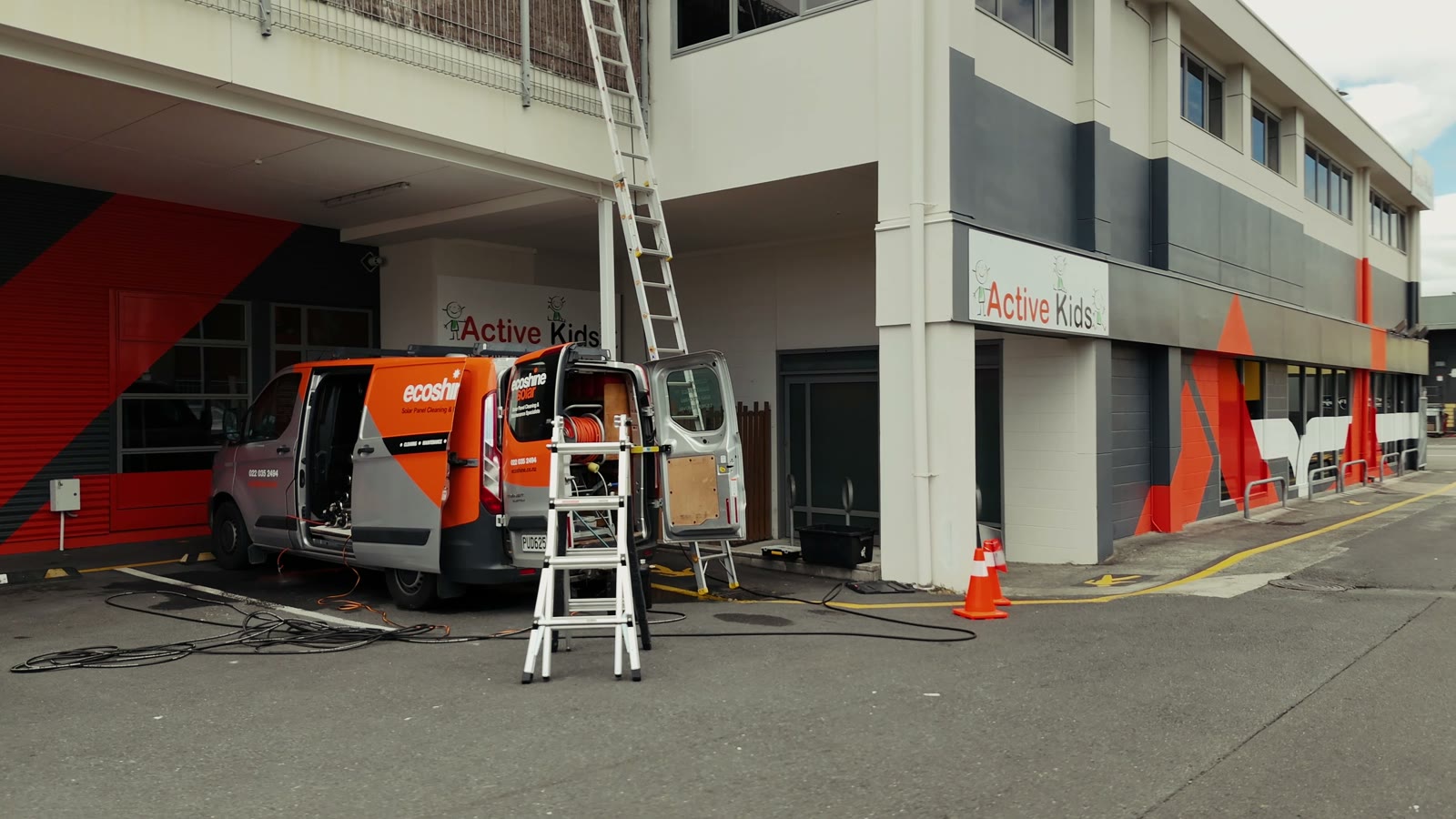
Most people judge a solar install on the day it goes in. We see it years later. Cleaning, inspecting and maintaining systems all over the North Island means we spend a lot of time on roofs well after the installer has packed up. “We’ve probably seen more systems post installation than anyone in the country, just by nature of what we’re doing,” says Edwin O’Dea from Eco Shine Solar.
Most installs we see are good. The ones that aren’t tend to go wrong in the same few places, and a good installer gets all of them right. Here’s what to look for.
It starts with the design
“Not installing a solar array on a south-facing roof sounds really simple,” Edwin says, “but I’ve seen it.” Thankfully that’s rare. The more common one is a system that’s simply too small for the house.
Because we’re the ones following up with customers a year or two later, we hear the regret. A lot of people tell us they’d happily have paid a bit more for a few more panels if someone had walked them through it at the start.
Batteries make the sums matter even more. We’ve seen homes with a new battery and barely enough solar to charge it properly. A good installer sits down with you, asks how you use power, and designs the system around that.
How it sits on the roof
Solar is part of your house, and people are proud of their homes. A competent installer knows how far to sit the array from the gutter line and the ridge, and makes sure it sits evenly on the roof. “It’s not as easy as it sounds,” Edwin says. “It can be quite tricky on some installations.” When it’s done well, it looks like it belongs there.
Where the cables go
Conduit is allowed on a roof, and there are jobs where it’s the right material. Ideally, though, cables run through the roof cavity. We’ve all driven past houses with conduit coming in from every corner of the roof, and it just looks odd.
The type of conduit matters too. We’ve seen indoor-grade conduit used on arrays to cut costs. “Looks great on install day,” Edwin says, “but give it a couple of years in the New Zealand summer and it’s all wilting, virtually eroding on the roof.”
His rule of thumb: if an installer isn’t getting the look right, they probably aren’t using the best gear either.
The parts you’d never think to ask about
The bolts fixing the system to your roof, the clamps, the rails. Nobody asks about them in the quote, and they decide how the system holds up. Cheaper metals slowly corrode, especially anywhere with salt spray in the air, which is a lot of New Zealand. On the coast, ask what the mounting system is made of and how it’s rated for salt.
Panels that don’t last the warranty
With cheaper panels, the defect we see most is snail trails: thin dark lines across a cell where it has cracked. They start barely visible and grow as the panel heats and cools every day, until output has dropped well below where it should be and, at worst, the panel becomes a fire risk. When we spot them we photograph them and compare on the next visit, so the owner knows how quickly they’re getting worse.
Warranties that only exist on paper
The reputable panel and inverter brands have warranties that work. We know because we’ve helped customers make claims and get panels or inverters swapped out.
We’ve also turned up to houses where the inverter had been dead for who knows how long, and the owner hadn’t noticed. Sometimes one look at the brand tells Edwin there’s no point chasing it. “They say it exists but it doesn’t. Anyone that’s been in solar knows this story.” The only option then is a new inverter, paid for by the owner.
What a good installer does after install day
A good installer will tell you that solar looks after itself pretty well if it’s put in properly, and that it still needs some maintenance. They’ll also follow up with you afterwards. “The better a system is installed, the less maintenance it’s going to have,” Edwin says. “I can get off the roof feeling positive and tell the customer the system’s looking as good as the day it was installed.”
How to choose an installer
Pick someone who’s installed a lot of solar and can prove it. “Don’t just read what they say on their website,” Edwin says. “Go and do your own research.” Read reviews, ask to see past jobs, and get a few quotes.
Write down what matters to you before you call. If looks come first and price third, say so. It helps the installer point you at the right system from the start.
Buy as much as you can afford. “My advice as someone that sees all these systems post installation is go for as much as you can afford at the time,” Edwin says. “I would prefer you not have solar for another year, save a bit more money and then get it done properly.”
Ask about the bits you can’t see. What the mounts and rails are made of, how the cables will run, what brand the panels and inverter are, and who handles a warranty claim.
Frequently asked questions
What are the most common solar installation mistakes?
Systems that are too small for the house, batteries without enough solar to charge them, untidy or indoor-grade conduit on the roof, cheap mounts that corrode near the coast, and low-quality panels and inverters that don’t make it to the end of their warranty.
Can solar panels face south in New Zealand?
South-facing panels get much less sun here, so they’re rarely a good choice. A good installer will design around north, east and west faces first.
Does the brand of inverter matter?
Yes. The reputable brands back their warranties and claims get honoured. Some cheaper brands have warranties that are very hard to use in practice.
How do I know if my system was installed well?
Look at how evenly it sits, how tidy the cabling is, and whether the inverter is running without errors. A clean and inspection will also pick up corrosion, damaged cabling and panel defects.
Already got solar?
We’ll clean it, check the panels, mounts and cabling, and send you photos of what we find. Get a free quote, read how long solar panels last, or find your area.