
Radiometric aerial thermography to IEC TS 62446-3. Every module scanned, every anomaly located and classified, in a report your O&M team, insurer or module manufacturer can act on.
EPC and O&M contractors. Subcontract the survey and keep the client. Handover baselines, end-of-defects checks and annual O&M scans, labelled to your string and tracker numbering when you supply the as-builts, so findings drop straight into work orders.
Asset owners and managers. Independent evidence of module and string condition, separate from what your monitoring platform tells you. Supporting evidence for performance disputes and warranty claims, and for the maintenance file your insurer now asks for at renewal.
Commercial property and facilities teams. Every module on a rooftop fleet scanned for faults with nobody on the roof, no harness plan and no shutdown. Anything fire-relevant is flagged for immediate action.
Installers. A check on your commercial installs before the defects liability period closes, usually 12 or 24 months, so any warranty claim is lodged before the window shuts.
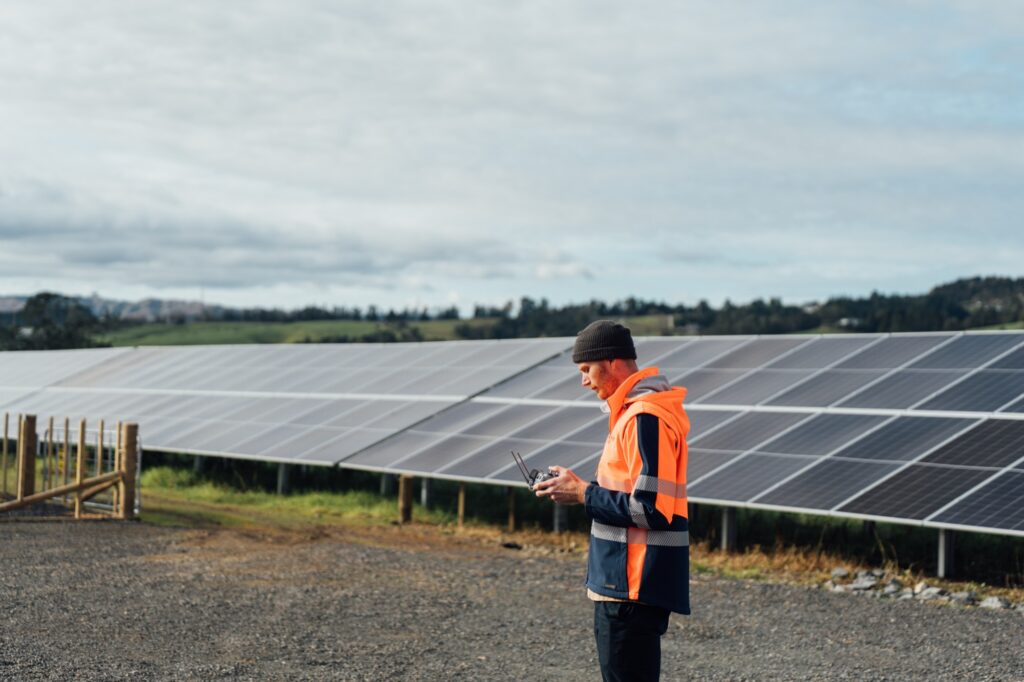
Captures from our own inspections. Brighter means warmer. Heat where there shouldn’t be any is where we start, and every one gets checked against the RGB frame before it’s classed.
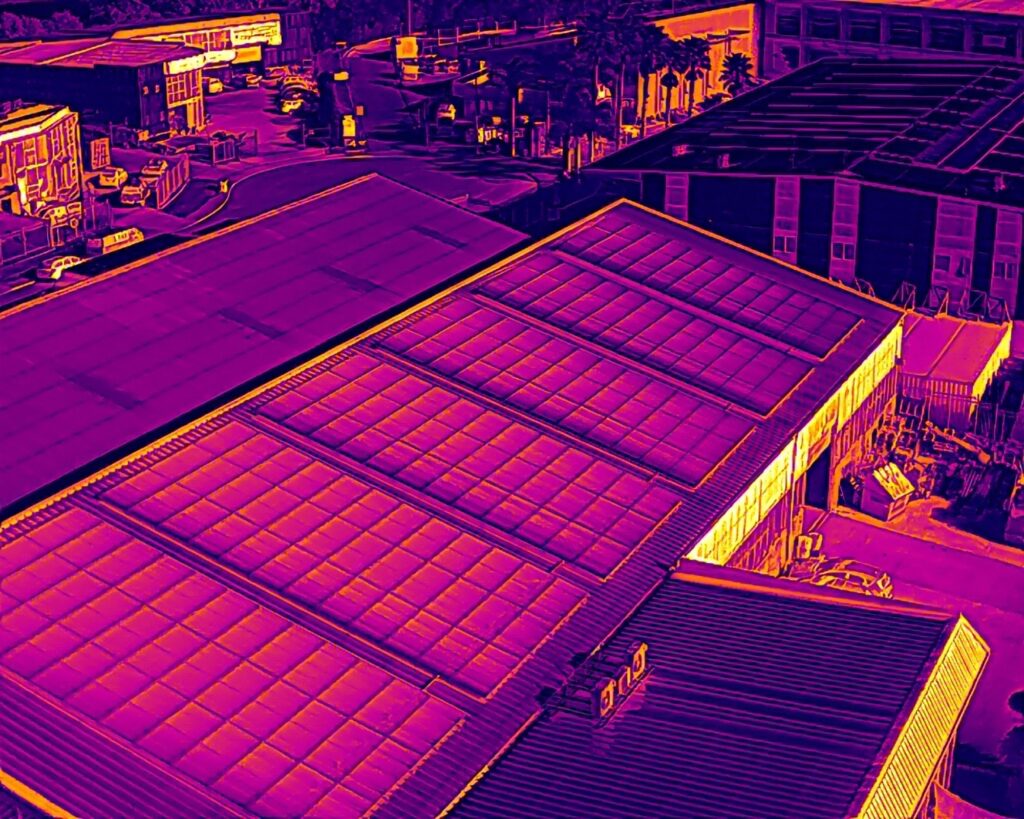
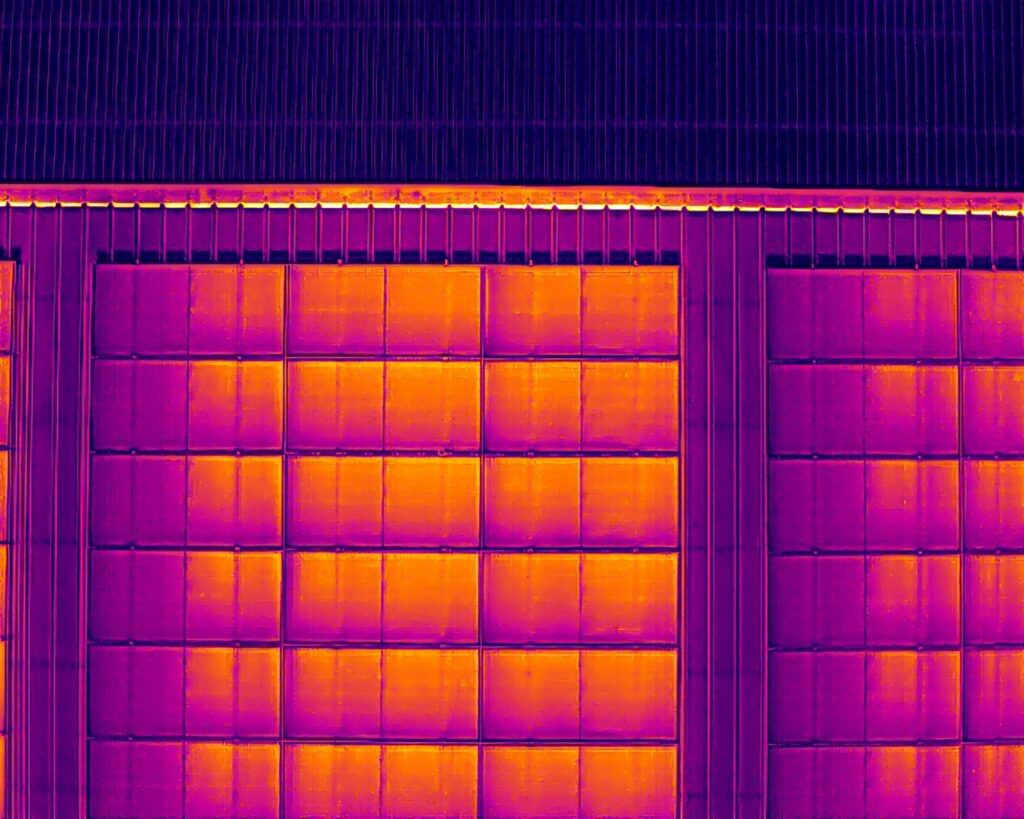
Turnaround: 3 working days for rooftops, 10 working days for solar farms.
Drone-only operators hand you a report and leave. We clean, thermally inspect and bird-proof the array in the same mobilisation.
The scan after cleaning is the one that counts. With the soiling gone and the glass dry, anything still running hot is a fault in the module or the wiring, not dirt, and that scan becomes your clean baseline. The scan before records what the dirt was costing you. On a solar farm that means one site induction, one traffic plan and one invoice instead of three of each.
Send us the site type, size and location. Firm price and a provisional flight date back within one working day, confirmed against the forecast the day before.
Site induction, AirShare clearance if needed, then 100% of modules flown inside the irradiance window. Nobody on your roof, no shutdown.
IEC TS 62446-3 report with every finding mapped and classified, an estimated power loss on each, plus a remediation list for your work orders. 3 working days for rooftops, 10 for farms.
Back to you within one working day with a price and a provisional flight date.
Do you need Part 102 for this?
Not for the work we do. Part 101 covers surveys under 120 m, within line of sight, with the property owner’s consent and nobody overflown who hasn’t agreed to it, and that describes almost every rooftop and solar farm in the country. Our pilot holds the Part 101 pilot certificate that allows operations near aerodromes with the operator’s agreement, and we handle AirShare clearances in controlled airspace.
Can you fly any day?
No. Thermal needs strong sun and low wind or the results are meaningless. We book a weather window and confirm the day before.
Do you fix what you find?
We report and classify. Electrical remediation goes to your O&M electrician or installer, and the report is written so they can walk straight to the module. Cleaning and bird-proofing we do ourselves.
What do you need from us?
As-built drawings or a string map (for rooftops, a roof plan is enough), site induction details, access and a contact on the day. And leave the system running as normal. Thermal only shows faults on an array under load, so don’t isolate it for us, and tell us if an inverter is down.
Where do you work?
Based in the Bay of Plenty, with crews across Auckland, Waikato, Northland, Hawke’s Bay and Taranaki. Solar farm surveys nationwide.
Can you do a house?
This page is for commercial and utility sites. For a home, see our residential solar panel cleaning, which includes a 7-point inspection on every visit.
Tell us the site type, size and location. We’ll come back within one working day with a firm price and a provisional flight date.