

A good solar panel on a New Zealand roof should last 25 to 30 years. That’s what most panel warranties promise, and it’s a fair expectation if the system was put in properly and looked after. Plenty of systems don’t get there, though. We regularly find panels eight or ten years old that are already producing well below where they should be.
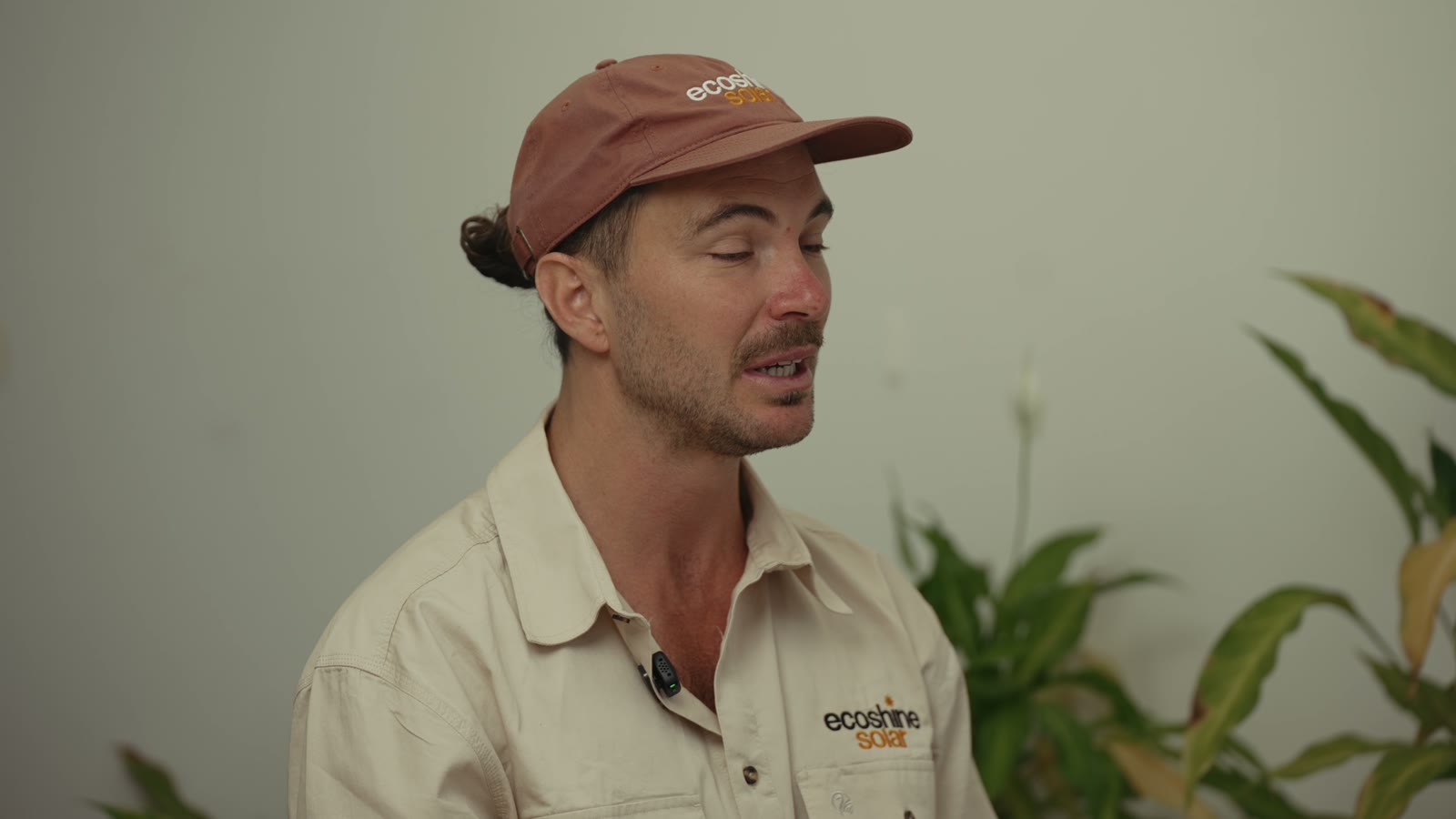
Edwin O’Dea has worked in solar since 2014, first in Australia and then with Eco Shine Solar since 2017. His job is making sure panels keep performing the way they’re supposed to, so he sees the systems that are on track and the ones that aren’t. This is what he’s learned about what decides how long yours lasts.
The short answer
Panels are tough. A quality panel loses a little output each year as it ages, and the performance warranty covers that slow drop over 25 to 30 years. They don’t switch off when the warranty ends either. They keep producing, just a bit less than when they were new.
The inverter is usually the first part to need replacing. Inverter warranties are much shorter than panel warranties, so most homes will replace theirs at least once over the life of the panels.
When a panel dies early, it’s almost always because of something that happened to it: what it was made of, how it was installed, or how it’s been treated since.
What cuts a panel’s life short
Lichen
Edwin calls lichen the silent killer of solar systems. It grows everywhere in New Zealand, and on panels that aren’t maintained it turns up sooner or later.
Lichen is dense. Once it spreads across the glass it shades the cell underneath completely, “no different than painting on top of your panels,” as Edwin puts it. Panels hate uneven shading, and a shaded patch becomes a hot spot. Leave it long enough and the cell under the lichen is damaged for good, even after the lichen has been cleaned off.
It also eats into the seals around the panel, and those seals are what keep water away from the electrics. Once water gets in you get a short circuit and a panel that needs replacing. That takes a long time, close to a decade. “But if you’re investing in solar for 25 years,” Edwin says, “why would you want it to last only a decade?”
There’s more on spotting and removing it in our guide to lichen on solar panels.
Cheap panels
The defect most homeowners can picture is what the industry calls snail trails: thin dark lines across a cell that show where it has cracked. They’re barely noticeable on day one. Every time the panel heats up and cools down, that crack gets stressed a little more, and over the years it grows. Eventually the panel loses a big chunk of its output and, at worst, becomes a fire risk.
“The customer is left with a panel they were told had a 25-year warranty,” Edwin says, “but it’s been eight years and the efficiency’s gone a lot lower than it should have.”
When we find snail trails we photograph them, explain what they mean and note them on your file. On the next visit we take a comparison photo, so we can tell you straight whether you’ve got years left in those panels or whether it’s time to talk about replacing them.
The wrong kind of cleaning
Two habits do most of the damage. The first is the water blaster. A solar panel is a thin silicon cell under a sheet of glass, and pressure on that glass, from a jet of water or from someone’s boots, causes micro cracks. They’re invisible to begin with, then grow through the same heating and cooling cycle until the panel stops working. It’s why panels should never be walked on.
The second is spraying the whole roof from the ground with a hose-on moss treatment or a bleach-based house wash. “It’s not going to do anything to it in the immediate term,” Edwin says, but harsh chemicals slowly break down the seals. Our post on getting your house washed when you have solar covers what to ask before anyone starts.
Cheap parts around the panels
The bolts, clamps and rails holding the system to your roof matter as much as the panels do. Cheaper metals slowly corrode, especially near salt spray, which covers a lot of New Zealand. We’ve also seen indoor-grade conduit used on roofs to save a few dollars. It looks fine on install day, and a couple of summers later it’s wilting in the sun.
Nobody keeping an eye on it
Most people are glued to their solar app for the first few months. By the time we turn up for a first clean, usually 12 to 18 months in, a lot of them haven’t opened it in ages. We’ve arrived at houses where the inverter had died and nobody knew. A system nobody checks can quietly stop paying its way.
How to get the full 25 years
Buy the best system you can afford. “You get what you pay for in solar,” Edwin says. “I would prefer you not have solar for another year, save a bit more money and then get it done properly.” Our post on what we see on roofs after the installer leaves covers what a good install looks like.
Get it cleaned and checked on a schedule. Panel warranties ask for a clean and inspection every year, and that’s what we base our service on. On a typical house roof, pitched somewhere between 15 and 30 degrees, you can often stretch it to every two years. Edwin’s rule is simple: never leave it longer than two years. That keeps you ahead of lichen before it gets into the awkward corners of the system, where it’s much harder to get out.
Clean it the right way. Purified water and a soft-bristled brush. No pressure, no harsh chemicals, and nobody standing on the panels.
Stay a little bit interested. Open the app every now and then and compare this month with the same month last year. Walk past the inverter. If the light’s green you’re all good. If it’s flashing a different colour or showing an error code, that’s when to call someone.
Keep a record. Every Eco Shine Solar clean comes with before and after photos and notes on anything we’ve spotted, so small problems get caught while they’re still small.
Where you live makes a difference
The same panel ages differently in Tauranga than it does in Taupō. On the coast, salt film builds up on the glass and works away at the rails and clamps. Inland, damp and shade bring lichen on faster. This is what we see most in each area we cover:
- Solar panel cleaning in Auckland: salt haze off two harbours, plus humid suburbs where lichen and mould get going.
- Solar panel cleaning in North Shore: Hauraki Gulf salt spray and mature trees dropping shade and leaf litter.
- Solar panel cleaning in Whangārei: Northland humidity, so lichen and moss are the main fight.
- Solar panel cleaning in Bay of Islands: salt spray off the bay and lichen on shaded arrays.
- Solar panel cleaning in Hamilton: river fog that keeps panels damp, and farm dust in summer.
- Solar panel cleaning in Tauranga: harbour and ocean salt, with orchard spray drift on top.
- Solar panel cleaning in Rotorua: geothermal sulphur and lake humidity.
- Solar panel cleaning in Whakatāne: lots of sun, coastal salt and orchard dust.
- Solar panel cleaning in Taupō: fine pumice dust and lichen on shaded roofs.
- Solar panel cleaning in Coromandel: salt from both coasts and lichen in the damp, bush-backed spots.
- Solar panel cleaning in Gisborne: coastal film and moss through the damp winters.
- Solar panel cleaning in Hawke’s Bay: dust off the plains and orchard pollen.
- Solar panel cleaning in New Plymouth: Tasman salt spray and dairy farm dust.
- Solar panel cleaning in Wellington: wind-driven salt spray and moss on shaded south faces.
Frequently asked questions
How long do solar panels last in New Zealand?
A quality panel that’s installed well and looked after should give you 25 to 30 years, which matches most panel warranties. Poor components, lichen and the wrong cleaning methods are what cut that short.
Do solar panels stop working after 25 years?
No. The warranty guarantees a minimum level of output over that time. After it ends the panels keep producing, just at a lower level than when they were new.
What usually fails first?
The inverter. It has a much shorter warranty than the panels, so expect to replace it at least once over the life of the system. Check it now and then: a green light means it’s working.
Does cleaning make solar panels last longer?
It stops the things that shorten their life. Lichen left on a panel causes hot spots and gets into the seals, and both can be permanent. Cleaning with purified water and a soft brush removes it without adding any damage of its own.
How often should I get my panels checked?
Warranties ask for once a year. On a typical home roof every two years is usually fine, but don’t leave it longer than that.
Find out how yours are tracking
If your system is a few years old and you’re not sure what shape it’s in, we’ll clean it, check it over and send you photos of what we found. Get a free quote, or watch the full interview with Edwin.