

If your business owns a solar array, there are three documents that assume you are maintaining it: the standard your system was installed under, your panel manufacturer’s warranty, and potentially your insurance policy. Most NZ businesses with solar cannot currently produce a maintenance record that satisfies any of them. This page covers what is actually expected and what a sensible maintenance arrangement looks like.
The standard
AS/NZS 5033, the standard governing solar PV installations in New Zealand, provides for periodic inspection of the system, and annual is the accepted interval. This is not a cleaning nicety. The inspection is about electrical safety: cable condition, connector integrity, earthing, mounting security, and signs of heat damage. On a commercial roof these things degrade quietly. Cables chafe on framing, connectors weather, fixings corrode, and thermal cycling loosens mounting hardware over years.
The warranty
Panel performance warranties run 25 years or more, and manufacturers write conditions into them. Some require documented professional maintenance, and a claim for underperforming panels can be declined if there is no record the system was ever inspected or cleaned. If your array is a significant asset on the balance sheet, an unenforceable warranty is a real exposure. The fix is cheap: maintain the system and keep the reports.
Insurance and due diligence
Ask your broker whether your policy expects the system to be maintained to the standard. Many material damage policies contain general maintenance obligations. Separately, if you report on sustainability or energy performance, generation shortfalls from soiling sit oddly next to published solar claims.
What a commercial maintenance visit should include
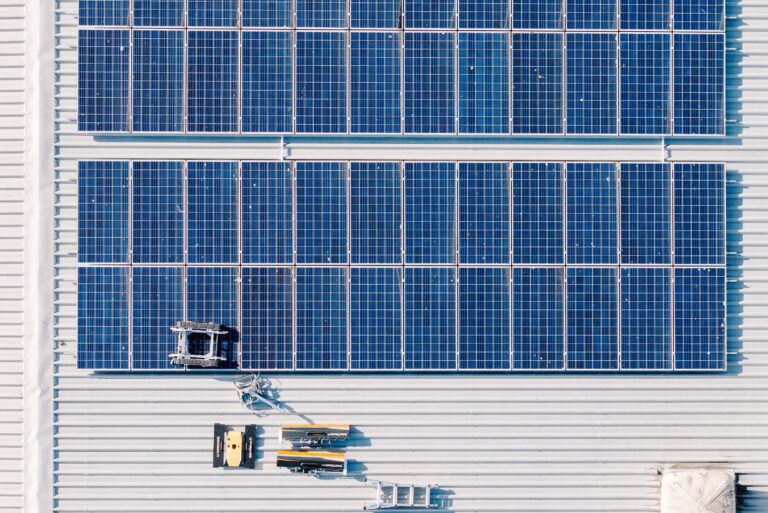
A proper visit is a clean plus an inspection, documented. Ours runs a structured check across panels, mounting, cabling, connectors and seals, with inverter readings taken before and after the clean, and a written report with photos at the end. The report is the point: it is the document that satisfies the warranty condition, supports an insurance position, and gives your monitoring data a clean baseline. For large or complex arrays we add drone thermal inspection, which finds failing panels and hot spots invisible from ground level.
On access: commercial sites are health and safety environments and we treat them that way. Our team works on harness systems, arranges elevated work platforms where roof access is not practical, and follows your site induction requirements. Scheduling works around your operation, including early starts and weekends.
Putting it on a cycle
The practical arrangement for most businesses is a scheduled cycle, sized to the site (see how often commercial panels need cleaning). One booking, one invoice, one report per visit, and a growing maintenance file that means the warranty question is never a problem. We maintain systems for businesses across the North Island, from single rooftop arrays to multi site portfolios, and have cleaned over 500,000 panels since we started. Request a quote or read more about commercial solar panel cleaning.
Common questions
Is an annual inspection legally mandatory?
AS/NZS 5033 is the installation standard and periodic inspection is what it provides for. The sharper obligations in practice are contractual: your warranty conditions and your insurance policy. Annual inspection satisfies all three conversations.
We lease our building. Whose problem is maintenance?
Whoever owns the array, which depends on your lease or power purchase arrangement. Worth establishing now rather than at claim time. We work with both landlords and tenants.
Can our facilities team do the inspection?
They can check monitoring data and look for obvious damage. The electrical inspection, working at height, and the documented report are where a specialist earns their keep. Water blasters and brushes from an access hatch also risk panel damage that voids the warranty the inspection is meant to protect.
What does it cost?
Commercial work is priced per panel on a volume scale, set by array size and access. Send through your site details and system size for a firm price.